

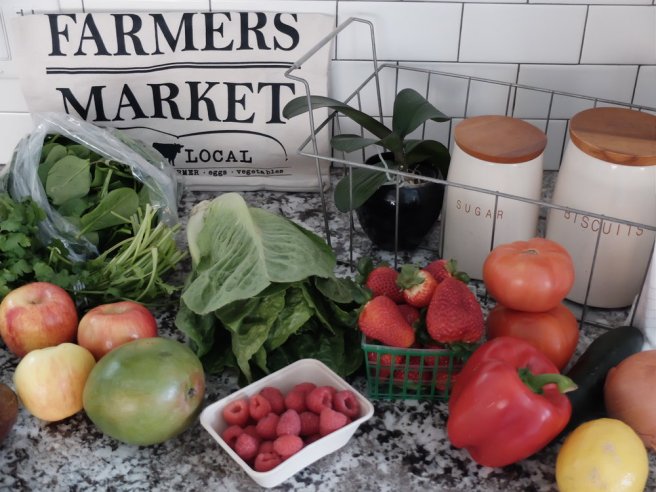
Ever been to the grocery store and wondered which foods you should buy organic and which ones don’t matter as much?
In an ideal world, I would buy EVERYTHING organic, but in an ideal world, I would also have ALL THE MONEY.
So, that brings me back to my first point: which ones matter?
I came across a handy guide from the Environmental Working Group that I have been using while shopping and it takes the guess work out of it. They have an annual report that shows which produce items have the highest amount of pesticides; those with the highest count get put on the Dirty Dozen list! They also have a Clean Fifteen list of fruits and vegetables which I will share below as well.
So what’s the deal with pesticides?
Pesticides are chemicals that are sprayed on the crops as they grow to ward off unwelcome pests and bugs, but the chemical residue stays on the produce and then we ingest it.
Every day, our bodies are exposed to toxins and chemicals. As the years go by, this chemical “body burden” accumulates and we can start having side effects such as headaches, birth defects and added strain on already weakened immune systems. There are some studies that have indicated that the use of pesticides can increase the risks of certain cancers such as leukemia, lymphoma, brain tumors, breast cancer and prostate cancer.
Also, Mamas! Babies and young children are the most vulnerable when it comes to exposure to pesticides due to the fact that their bodies are still growing along with their immune system and brain development. Exposure to pesticides have the potential to cause developmental delays, harm to their immune system, and behavior disorders. ALSO, pregnant Mamas! Pesticides put extra work on your already hard-working body, AND they can be passed to the fetus in utero, and also passed along to your baby in breast milk.
An amazing article outlining the importance of organic vs. conventionally grown produce can be found here
Below, I have outlined the list of the most important produce items to buy organically. If you go to EWG.org, you can download their printable guide, which is helpful as well!
Dirty Dozen:
- Strawberries
- Spinach
- Nectarines
- Apples
- Peaches
- Pears
- Cherries
- Grapes
- Celery
- Tomatoes
- Sweet Bell Peppers
- Potatoes
Clean Fifteen:
- Sweet Corn
- Avocados
- Pineapples
- Cabbage
- Onions
- Sweet Peas frozen
- Papayas
- Asparagus
- Mangos
- Eggplant
- Honeydew Melon
- Kiwi
- Cantaloupe
- Cauliflower
- Grapefruit
Let me just add a disclaimer here. Buying organic is great if you can, but sometimes it isn’t realistic for everyone. Buying fresh produce, organic or not, is always the best for our bodies. My goal with this post is not to discourage you by any means; it is meant to equip you with the information you need to make an informed decision.
Also, if you have local farms near you, look into their practice. At lot of farms practice organic farming and are very responsible with the methods they use, but it costs money to become a certified organic farmer, thus preventing them from advertising as such.

 Coast x Coast Motherhood
Thanks Dee for helping me live the 2nd half of my life much more aware than I ever was during the 1st half. Great info!!
LikeLike
Thanks for reading 🙂 I’m glad we are doing this intentional life together! 💛
LikeLike